When Inventory Growth Outpaces Available Space
Inventory fluctuations are a reality for nearly every business. Whether driven by seasonal demand, retail rollouts, product launches, supply chain disruptions, acquisitions, or large-scale projects, there are times when inventory levels increase faster than existing facilities can accommodate.
The challenge isn’t always moving more products. Often, it’s finding space to store them efficiently without disrupting day-to-day operations.
Many organizations discover that their permanent warehouse footprint is designed for normal operating conditions—not temporary spikes in volume. When inventory surges occur, facilities become overcrowded, workflows slow down, and fulfillment efficiency suffers. That’s where temporary warehousing becomes an essential part of a scalable logistics strategy.
At TTi Logistics, we’ve spent more than 30 years helping organizations navigate changing inventory demands. From retail fixture rollouts and hospitality projects to healthcare equipment deployments and seasonal inventory peaks, we’ve seen how the right temporary warehousing solution can protect operations, reduce costs, and improve supply chain flexibility.
Understanding the Causes of Inventory Surges
Inventory surges can happen for many reasons, and not all of them are predictable.
Some businesses experience annual seasonal peaks tied to holidays, promotional events, or peak buying cycles. Others encounter sudden increases due to customer growth, mergers and acquisitions, project-based deployments, or unexpected supply chain disruptions.
In recent years, many companies have also increased inventory levels to protect against manufacturing delays and transportation challenges. While this strategy can improve product availability, it often creates new storage challenges that existing facilities were never designed to handle.
Regardless of the cause, inventory surges create pressure throughout the supply chain. Organizations must quickly determine where products will be stored, how inventory will be managed, and how fulfillment operations will continue without interruption. Strategic temporary warehousing provides a solution that allows businesses to absorb these fluctuations without making permanent infrastructure investments.
The Risks of Warehouse Overcrowding
When inventory exceeds available capacity, warehouse performance often declines rapidly.
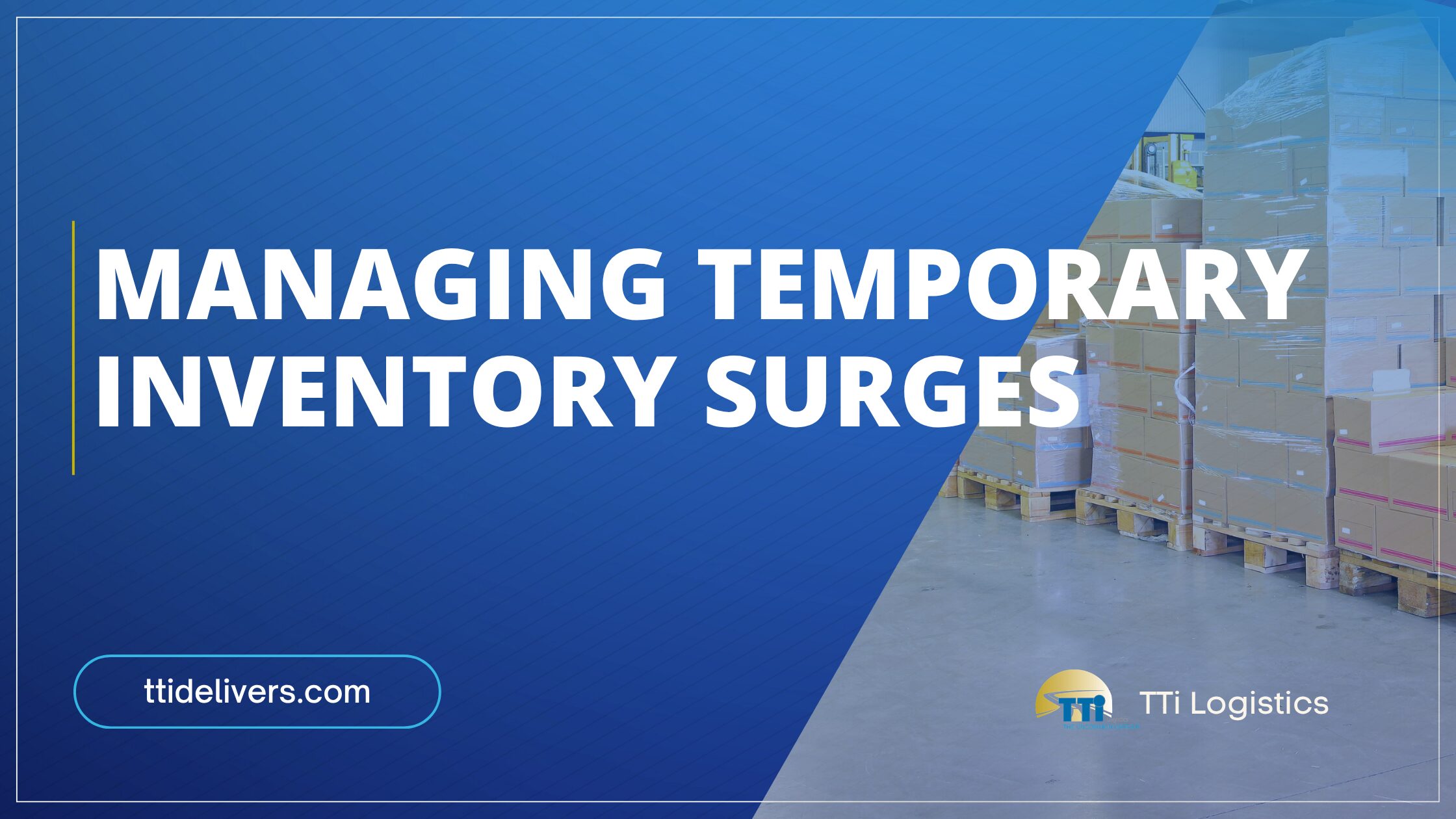
A facility designed to operate at optimal efficiency can become difficult to manage when aisles are blocked, staging areas are consumed by overflow inventory, and products must be stored in less-than-ideal locations. These conditions increase labor requirements and reduce overall productivity.
Overcrowded warehouses frequently experience:
- Slower picking and packing times
- Increased product damage
- Inventory inaccuracies
- Reduced worker efficiency
- Delayed shipments
- Safety concerns
Rather than forcing additional inventory into already strained facilities, businesses can use temporary warehousing to maintain operational flow while preserving warehouse performance.
Creating additional storage capacity helps organizations avoid bottlenecks and maintain service levels during periods of elevated demand.
Why Temporary Warehousing Provides Flexibility
One of the greatest advantages of temporary warehousing is flexibility.
Unlike permanent warehouse expansion projects, which often require significant capital investment and long-term commitments, temporary warehousing allows businesses to scale capacity based on current needs.
Organizations can add storage space for:
- Seasonal inventory
- Product launches
- Retail rollouts
- Trade show assets
- Construction materials
- Hospitality FF&E projects
- Medical equipment deployments
- Excess safety stock
This flexibility enables companies to respond quickly to changing market conditions while maintaining control over costs.
Instead of investing in additional real estate that may not be needed year-round, businesses can leverage temporary warehousing solutions that align with actual demand patterns.
Supporting Seasonal Demand Without Permanent Expansion
Seasonal fluctuations remain one of the most common drivers of inventory surges.
Retailers preparing for holiday shopping periods, manufacturers supporting peak production cycles, and distributors responding to seasonal demand often require additional storage space for only a few months each year.
Building or leasing permanent facilities for temporary demand rarely makes financial sense.
This is where temporary warehousing becomes especially valuable. By securing short-term storage capacity, businesses can accommodate increased inventory levels without carrying unnecessary overhead during slower periods.
Seasonal inventory strategies supported by temporary warehousing help organizations remain agile while preserving capital for other operational priorities.
Improving Supply Chain Resilience
Supply chain disruptions have become increasingly common in recent years.
Port congestion, transportation delays, manufacturing interruptions, labor shortages, and geopolitical events can all impact inventory planning. In response, many organizations have adopted inventory buffering strategies that require additional storage capacity.
Maintaining higher inventory levels can improve product availability, but it also creates space challenges.
Strategic temporary warehousing provides organizations with the flexibility needed to build inventory reserves without overwhelming existing facilities. This additional capacity helps businesses respond more effectively to uncertainty while maintaining continuity of operations.
Companies that incorporate temporary warehousing into their contingency planning often recover more quickly from disruptions and maintain stronger service performance during periods of supply chain volatility.
Supporting Large-Scale Projects and Rollouts
Project-based inventory requirements often create temporary storage needs that differ significantly from everyday operations.
Retail fixture rollouts, hospitality renovations, healthcare installations, and technology deployments frequently involve receiving large quantities of inventory within compressed timeframes. Products may need to be staged, organized, inspected, and distributed to multiple locations over several weeks or months.
In these situations, temporary warehousing serves as a critical control point within the supply chain.
Rather than sending products directly to job sites, businesses can use temporary warehousing facilities to coordinate deliveries, verify inventory, and prepare shipments for deployment. This approach improves visibility while reducing project complexity.
Staging inventory through temporary facilities often results in smoother execution and stronger overall project performance.
Enhancing Inventory Visibility and Control
Additional storage capacity alone is not enough.
Successful temporary warehousing solutions should also provide visibility into inventory status, location, and availability. Businesses need confidence that products remain accessible and properly managed throughout the storage period.
Modern warehouse management systems help organizations maintain control over inventory even when products are distributed across multiple facilities.
Effective temporary warehousing programs include:
- Inventory tracking
- Receiving management
- Cycle counts
- Order fulfillment support
- Reporting capabilities
- Shipment coordination
These services help ensure inventory remains organized, accurate, and ready for deployment when needed.
Reducing Transportation Inefficiencies
Inventory surges can create transportation challenges in addition to storage concerns.
When products are stored far from end users or project locations, transportation costs increase and delivery timelines become more difficult to manage. Strategic placement of temporary warehousing facilities can help reduce these inefficiencies.
By positioning inventory closer to customers, stores, project sites, or distribution centers, businesses can improve delivery responsiveness while lowering transportation expenses.
Regional temporary warehousing strategies also create opportunities to consolidate shipments, improve scheduling flexibility, and support more efficient final-mile execution.
The result is a supply chain that operates more efficiently from both a cost and service perspective.
Choosing the Right Temporary Warehousing Partner
Not all warehouse providers are equipped to support temporary inventory surges.
Organizations should evaluate potential partners based on more than available square footage. The right provider should offer operational expertise, technology capabilities, transportation coordination, and scalable solutions that align with business objectives.
Key considerations include:
- Geographic coverage
- Inventory visibility
- Scalability
- Transportation integration
- Security measures
- Industry experience
- Project management support
A strong temporary warehousing partner functions as an extension of your supply chain team rather than simply providing storage space.
The right relationship can improve operational efficiency while reducing the complexity associated with managing inventory fluctuations.
Planning Ahead for Future Inventory Surges
One of the most effective ways to manage inventory surges is proactive planning.
Businesses that wait until warehouses are already full often face limited options and higher costs. Developing a strategy for temporary warehousing before additional space is needed allows organizations to respond more quickly when inventory levels increase.
Planning should include:
- Forecasting demand fluctuations
- Identifying potential storage locations
- Establishing transportation strategies
- Defining inventory management processes
- Creating contingency plans
By preparing in advance, businesses can turn inventory surges from operational challenges into strategic opportunities.
Organizations that incorporate temporary warehousing into their long-term logistics planning are often better positioned to support growth while maintaining operational efficiency.
How TTi Logistics Helps Businesses Manage Temporary Inventory Surges
At TTi Logistics, we understand that inventory demands rarely remain static. Businesses need flexible solutions that can adapt as conditions change.
Our nationwide network provides access to strategically located facilities that support short-term and project-based storage requirements. Whether you’re managing seasonal inventory, supporting a retail rollout, staging healthcare equipment, or navigating supply chain disruptions, our temporary warehousing solutions are designed to help you maintain control and visibility.
With more than 700 warehouse locations across North America, integrated transportation services, inventory management capabilities, and over 30 years of logistics expertise, TTi helps organizations develop smarter storage strategies that support operational efficiency and long-term growth.
Inventory surges don’t have to create bottlenecks, delays, or unnecessary costs. With the right temporary warehousing strategy, businesses can maintain flexibility, improve responsiveness, and keep their supply chain moving forward regardless of changing demand conditions.