The False Choice Between Sustainability and Speed
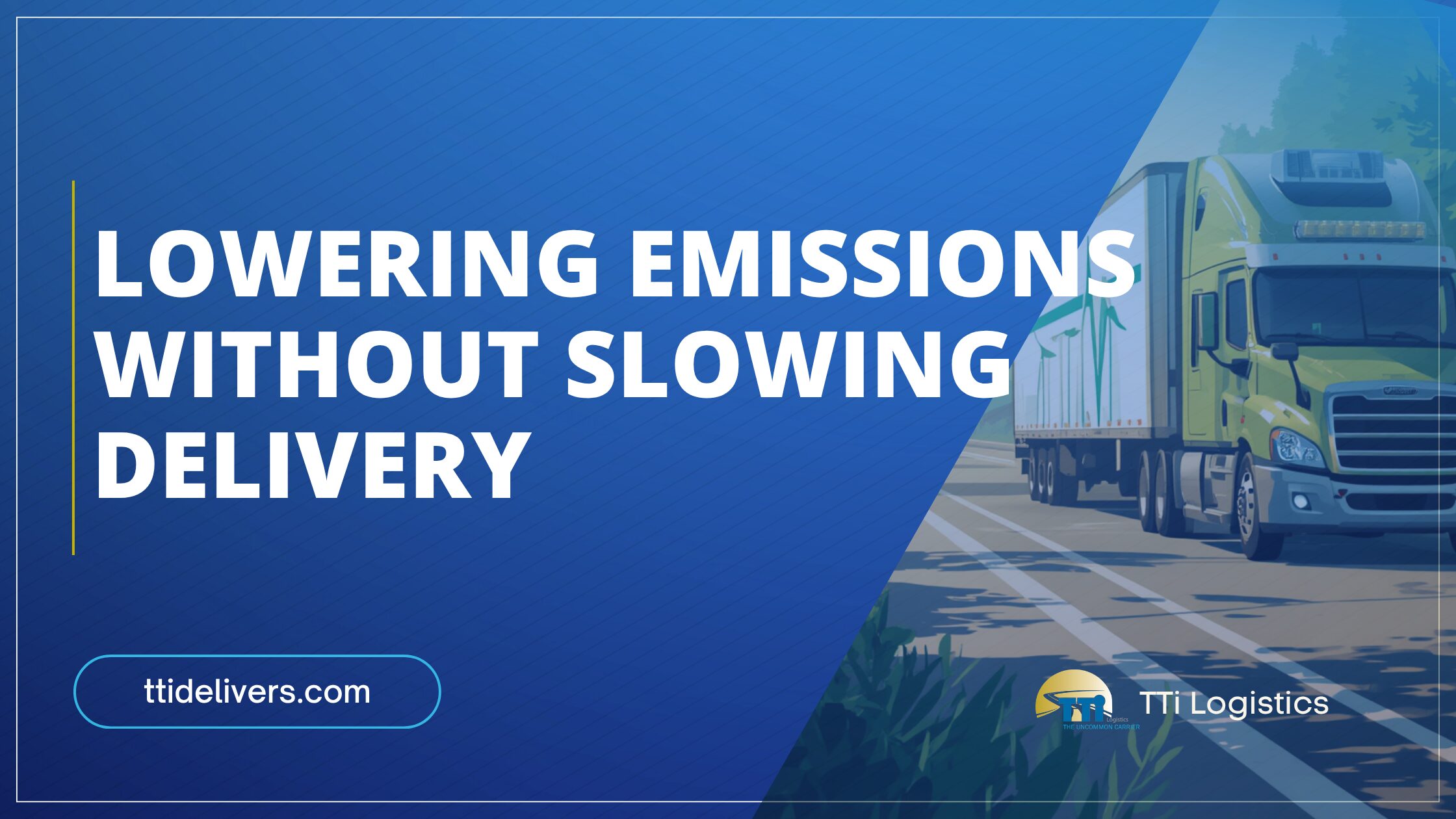
For a long time, sustainability and speed were treated as opposing forces in logistics. The assumption ran something like this: fast delivery requires more trucks running more direct routes with less regard for efficiency, while low-emission logistics requires consolidating shipments, running fuller loads, and accepting longer transit windows in exchange for a smaller environmental footprint. Businesses felt they had to pick one.
That assumption no longer holds up. The logistics operations making the most meaningful progress on emissions today aren’t slowing down to do it. They’re finding efficiency gains that reduce environmental impact and improve delivery performance at the same time, because in a surprising number of cases, the two goals point in exactly the same direction.
Consider route optimization. A poorly planned delivery route doesn’t just burn more fuel — it also takes longer, ties up a vehicle for more hours, and increases the chance of a missed delivery window. Fixing that route reduces emissions and improves speed simultaneously. The same logic applies across much of low-emission logistics: the changes that reduce environmental impact are frequently the same changes that eliminate waste, and waste is rarely good for delivery performance either.
Where Emissions Actually Come From in a Logistics Network
Meaningful progress on low-emission logistics starts with understanding where emissions are actually generated, because the answer isn’t as simple as “trucks burn fuel.” Different stages of a logistics network contribute to emissions in different ways, and the highest-impact opportunities aren’t always where businesses assume they are.
Transportation is the most visible source, and within transportation, empty or partially loaded miles represent one of the largest avoidable sources of emissions in the entire industry. A truck running at 60% capacity still burns nearly as much fuel as one running full, which means every empty mile driven is emissions generated without any corresponding value delivered. This single inefficiency, more than almost any other factor, explains why route and load optimization has become central to low-emission logistics strategy.
Warehousing contributes as well, though less visibly. Facility energy use, equipment operation, and even inefficient warehouse layouts that require excess material handling all add to a logistics network’s overall footprint. A warehouse designed around efficient flow — minimizing unnecessary movement between receiving, storage, and shipping — reduces both energy consumption and labor time, another example of sustainability and operational efficiency reinforcing each other rather than competing.
Packaging is a smaller but still meaningful contributor, particularly when oversized packaging increases the number of trips needed to move the same volume of product, or when materials aren’t recyclable and simply add to landfill volume downstream.
Route Optimization: The Highest-Leverage Opportunity
If there’s a single area where low-emission logistics and delivery speed align most directly, it’s route optimization. Grouping deliveries geographically, sequencing stops to minimize backtracking, and adjusting routes based on real-time traffic conditions all reduce total miles driven — which simultaneously reduces fuel consumption and shortens delivery time.
A logistics network running optimized routes typically sees fewer total miles driven per delivery, which compounds significantly across a fleet moving hundreds of shipments daily. That reduction shows up as lower fuel costs, lower emissions, and — because vehicles aren’t wasting time on inefficient paths — more capacity to complete additional deliveries within the same operating window.
This is why route optimization software has become such a central tool in low-emission logistics strategy. It isn’t primarily a sustainability tool that happens to save money. It’s an efficiency tool that happens to reduce emissions as a direct consequence of eliminating waste.
Load Consolidation Without Sacrificing Delivery Windows
Consolidating shipments into fuller loads is one of the most effective levers in low-emission logistics, but it’s also the one businesses worry about most when it comes to delivery speed. The concern is understandable: waiting to fill a truck before it departs sounds like it should mean slower delivery.
In practice, well-managed consolidation doesn’t have to work that way. The key is timing consolidation around realistic delivery windows rather than treating a full truck as more important than an on-time arrival. A logistics operation with strong visibility into inbound freight can consolidate shipments heading to the same region or along the same route without delaying any individual shipment past its committed window — because the consolidation opportunity is identified early enough to plan around it, rather than discovered at the last minute and forced to choose between a full truck and a missed appointment.
This is where technology and low-emission logistics intersect most productively. Real-time visibility into shipment volume and destination allows logistics teams to identify consolidation opportunities proactively, rather than reactively delaying shipments to wait for more freight to accumulate.
Fleet Efficiency Beyond Fuel Type
Conversations about low-emission logistics often jump immediately to alternative fuel vehicles or electric trucks, and while fleet composition matters, it’s only part of a much broader picture. A fleet of efficient, well-maintained vehicles running optimized routes can meaningfully reduce emissions even before a single vehicle is replaced.
Regular maintenance keeps engines running at peak efficiency rather than gradually burning more fuel as components wear down. Driver behavior — smooth acceleration, reduced idling, consistent speeds — affects fuel consumption more than most businesses realize, often by a significant margin over the course of a year. None of these improvements require new equipment, and all of them contribute to low-emission logistics while simultaneously reducing operating costs.
Fleet modernization remains an important long-term strategy, and TTi has covered the evolving landscape of vehicle technology in its look at how innovative technology is revolutionizing last-mile delivery. But businesses shouldn’t wait for a full fleet transition to begin reducing emissions. The operational efficiencies available today, through fleet management practices already within reach, often deliver meaningful results well before any new vehicle purchase enters the conversation.
Warehousing’s Role in a Lower-Emission Network
Strategic warehouse placement plays a larger role in low-emission logistics than many businesses initially recognize. A distribution network with warehouses positioned closer to end customers reduces the total distance freight has to travel on its final leg — the stage of delivery that tends to be the least fuel-efficient per mile, given stop-and-go city driving and smaller, more frequent deliveries.
This is part of why micro-fulfillment strategies have gained traction — bringing inventory physically closer to the customers who will ultimately receive it reduces last-mile emissions while often improving delivery speed at the same time, since shorter distances typically mean faster arrival windows as well.
Warehouse operations themselves also contribute to a lower-emission footprint through efficient layout design, energy-conscious facility management, and inventory management systems that reduce unnecessary movement of goods within a facility. Every unnecessary trip across a warehouse floor, multiplied across thousands of picks per day, adds up to real energy consumption that better organization can eliminate.
Why This Matters Beyond Environmental Responsibility
Low-emission logistics is increasingly a business expectation, not just an environmental one. Customers, retail partners, and corporate procurement teams are asking more detailed questions about the environmental impact of their supply chains, and businesses without credible answers are finding themselves at a competitive disadvantage in RFPs and partnership decisions.
TTi has explored this shift toward measurable sustainability performance in its coverage of sustainability certifications in logistics, which increasingly serve as a credible signal to partners and customers that emissions reduction isn’t just a stated goal but a demonstrated practice.
The businesses succeeding here have stopped treating low-emission logistics as a separate initiative running parallel to operations, and started treating it as an outcome of running operations well. Optimized routes, efficient warehousing, well-maintained fleets, and smart consolidation aren’t sustainability projects with an emissions benefit attached. They’re operational best practices that happen to produce lower emissions as a natural result.
Moving Forward Without Trading Speed for Sustainability
The idea that low-emission logistics requires slower delivery reflects an outdated model of how logistics networks operate. Modern route optimization, strategic warehouse placement, proactive consolidation, and fleet efficiency all demonstrate that emissions reduction and delivery performance can improve together, because both ultimately depend on eliminating the same underlying waste — empty miles, inefficient routes, and disconnected planning.
Businesses that treat low-emission logistics as an efficiency strategy, rather than a constraint layered on top of an existing operation, tend to find that the two goals were never really in conflict to begin with.