Why Workforce Flexibility Has Become a Defining Challenge in Logistics
The logistics industry has entered an era where flexibility is no longer optional. Shifting consumer expectations, unpredictable demand cycles, labor shortages, and the rise of technology-driven operations have transformed how logistics teams must function. At the same time, reliability remains non-negotiable. Missed deliveries, staffing gaps, or inconsistent service can quickly erode trust and disrupt supply chains.
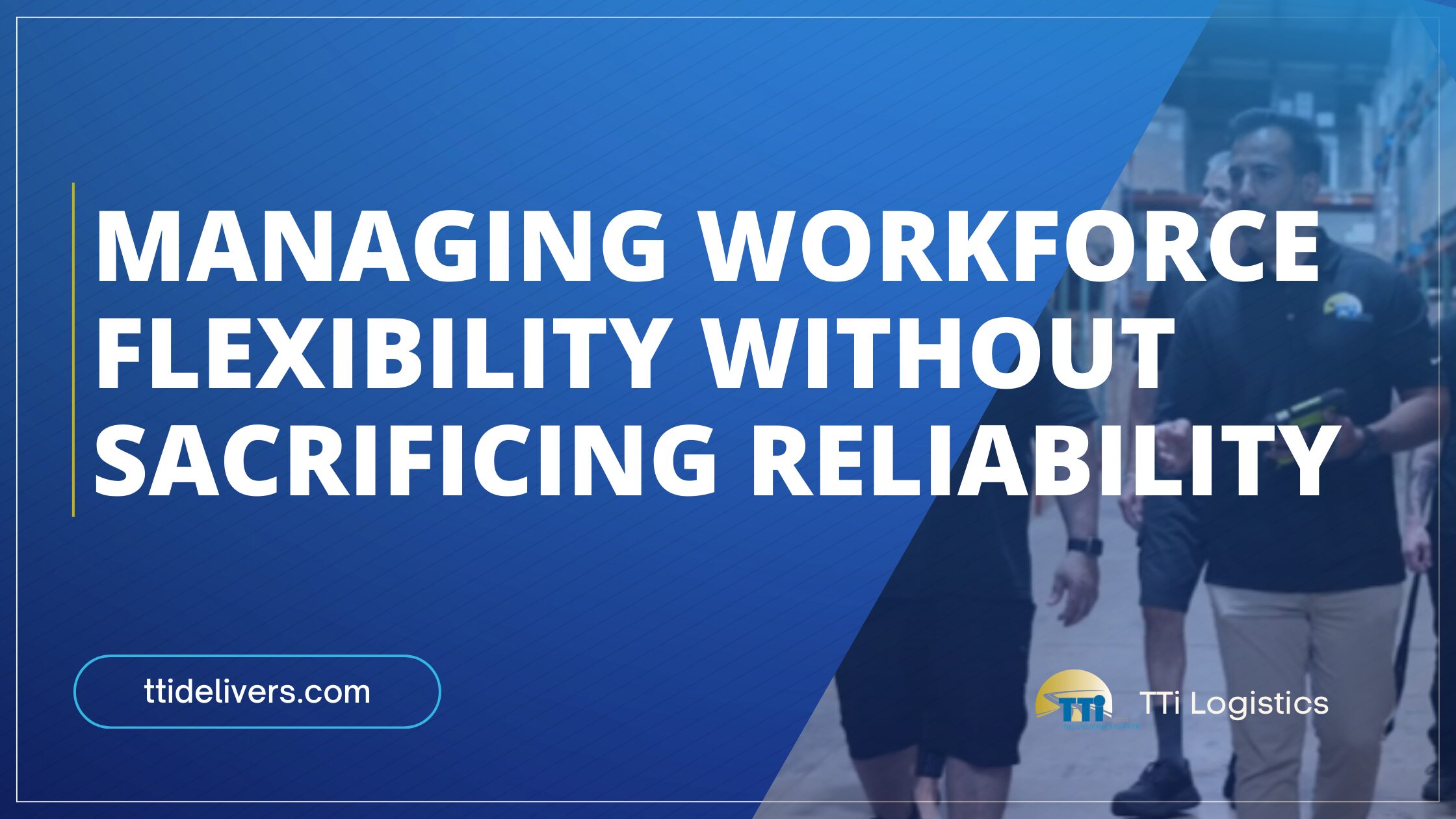
Managing workforce flexibility without sacrificing reliability is now one of the most critical aspects of logistics workforce management. Companies must balance adaptable staffing models with consistent execution—ensuring the right people are in the right roles at the right time, without compromising performance or accountability.
This balance requires more than short-term labor fixes. It demands strategic workforce planning, smart use of technology, cross-trained teams, and leadership structures that support agility while maintaining operational discipline.
The Workforce Reality Facing Modern Logistics Operations
Logistics teams are operating in an environment shaped by volatility. Seasonal surges, regional demand spikes, e-commerce acceleration, and global disruptions have created uneven workloads that fluctuate rapidly. Traditional fixed staffing models struggle to keep pace with these changes.
Key workforce pressures shaping logistics today include:
- Ongoing labor shortages across warehousing, transportation, and last-mile delivery
- Rising labor costs and increased competition for skilled workers
- Greater reliance on contingent, contract, or temporary labor
- Higher expectations for speed, accuracy, and service consistency
In logistics workforce management, flexibility often emerges as the solution. However, without structure, flexibility can introduce new risks—such as inconsistent performance, communication breakdowns, and operational inefficiencies.
Understanding Workforce Flexibility in Logistics
Workforce flexibility in logistics refers to the ability to scale labor up or down, adjust roles, and redeploy talent quickly in response to changing operational needs. This can take many forms, including:
- Variable staffing levels based on demand
- Cross-functional roles that allow employees to shift tasks
- Use of temporary or contract labor during peak periods
- Flexible scheduling models and shift structures
While these approaches improve responsiveness, they must be implemented within a controlled framework. Effective logistics workforce management ensures flexibility enhances reliability rather than undermines it.
Reliability: The Cornerstone of Logistics Performance
Reliability in logistics means delivering consistent results regardless of external conditions. It includes:
- On-time pickups and deliveries
- Accurate order fulfillment
- Safe handling of goods
- Predictable service levels across regions and timeframes
Workforce reliability depends on clear processes, trained personnel, and accountability at every level. When flexibility is introduced without reinforcing these fundamentals, service quality can suffer.
The challenge is not choosing between flexibility and reliability—it is designing workforce systems that support both simultaneously.
Strategic Workforce Planning as the Foundation
Long-term workforce planning is essential for balancing adaptability with consistency. Instead of reacting to labor shortages or demand spikes, logistics organizations must anticipate them.
Effective planning within logistics workforce management includes:
- Forecasting labor needs using historical data and predictive analytics
- Identifying peak periods and seasonal patterns
- Aligning staffing models with service-level requirements
- Building contingency plans for unexpected disruptions
By proactively modeling workforce scenarios, companies can deploy flexible labor strategies without scrambling to maintain reliability.
Cross-Training: The Key to Agile Yet Dependable Teams
Cross-training is one of the most powerful tools in logistics workforce management. When employees are trained to perform multiple roles, organizations gain flexibility without relying solely on external labor sources.
Benefits of cross-training include:
- Reduced dependency on temporary labor
- Faster response to absences or workload shifts
- Improved operational continuity
- Stronger employee engagement and skill development
Cross-trained teams can move seamlessly between tasks such as picking, packing, loading, dispatch coordination, and quality control—maintaining reliability even during staffing fluctuations.
Technology as a Workforce Stabilizer
Technology plays a critical role in enabling flexible yet reliable logistics operations. Workforce management systems, automation tools, and data analytics help organizations make informed decisions about staffing and performance.
Key technologies supporting logistics workforce management include:
- Workforce management software for scheduling and labor forecasting
- Warehouse management systems that optimize task assignments
- Real-time performance tracking dashboards
- Automation tools that reduce dependency on manual labor
These systems create visibility into labor utilization, allowing managers to adjust staffing levels without compromising service standards.
Flexible Scheduling Without Operational Chaos
Flexible scheduling is increasingly important for attracting and retaining talent, especially in a competitive labor market. However, poorly managed schedules can lead to coverage gaps and inefficiencies.
Successful flexible scheduling strategies include:
- Core staffing levels supported by variable shifts
- Staggered start times aligned with workload patterns
- Clear availability expectations for flexible workers
- Transparent communication across teams
When scheduling flexibility is supported by strong coordination, logistics workforce management remains reliable even as schedules adapt.
Managing Temporary and Contingent Labor Effectively
Temporary labor is often necessary during peak seasons, special projects, or unexpected surges. The key is integrating contingent workers into operations without lowering standards.
Best practices include:
- Standardized onboarding and training protocols
- Clear performance expectations and accountability measures
- Defined roles that complement core staff responsibilities
- Ongoing supervision and quality checks
Temporary workers should be viewed as an extension of the workforce—not a separate tier with lower expectations. This mindset preserves reliability while allowing for workforce elasticity.
Leadership and Communication in Flexible Workforce Models
Strong leadership is essential when managing flexible teams. Clear communication ensures everyone understands expectations, priorities, and performance metrics.
Effective leadership within logistics workforce management focuses on:
- Clear chain-of-command structures
- Consistent messaging across shifts and locations
- Rapid escalation paths for issues or exceptions
- Empowerment of frontline supervisors
When leadership remains steady, teams can adapt quickly without confusion or service disruptions.
Maintaining Safety and Compliance Amid Workforce Changes
Safety and compliance cannot be compromised in the pursuit of flexibility. Rapid workforce changes increase the risk of accidents, errors, and regulatory violations if not properly managed.
To protect reliability, logistics organizations must ensure:
- All workers receive appropriate safety training
- Compliance standards are enforced uniformly
- Equipment usage protocols are clearly communicated
- Audits and inspections remain consistent
Strong safety programs reinforce reliability and protect both workers and operations during periods of workforce fluctuation.
Performance Measurement and Accountability
Measuring performance is critical to ensuring flexibility does not dilute results. Clear metrics allow organizations to identify gaps early and correct issues before they escalate.
Key performance indicators in logistics workforce management often include:
- Productivity rates per labor hour
- Order accuracy and error rates
- Attendance and punctuality
- Safety incidents and compliance adherence
Data-driven performance management ensures flexible workforce strategies deliver consistent outcomes.
Retention as a Reliability Strategy
Retention is often overlooked in discussions of workforce flexibility, yet it plays a vital role in reliability. High turnover undermines training investments, institutional knowledge, and service consistency.
Retention-focused strategies include:
- Career development and upskilling opportunities
- Competitive compensation and benefits
- Predictable scheduling frameworks
- Recognition of performance and contributions
A stable core workforce provides the foundation upon which flexible labor models can succeed.
Aligning Workforce Strategy With Business Objectives
Workforce flexibility must support broader business goals—not operate in isolation. Logistics workforce management should align with objectives such as cost control, customer satisfaction, scalability, and long-term growth.
This alignment ensures workforce decisions reinforce reliability rather than create operational silos or inefficiencies.
Building Resilience Through Workforce Design
Resilient logistics organizations design their workforce to absorb shocks without breaking. Flexibility becomes a strength rather than a vulnerability when embedded into structured systems.
Resilient workforce design includes:
- Redundant skill coverage
- Multiple labor sourcing options
- Scalable technology platforms
- Clear emergency response protocols
These elements allow operations to continue smoothly even during disruptions.
The Future of Logistics Workforce Management
As automation, AI, and analytics continue to evolve, logistics workforce management will become increasingly data-driven. Human labor will remain essential, but roles will shift toward oversight, problem-solving, and coordination.
Organizations that succeed will be those that view flexibility as a strategic capability—supported by training, technology, and leadership—rather than a reactive measure.
Creating Balance Without Compromise
Managing workforce flexibility without sacrificing reliability is one of the defining challenges in logistics today. It requires intentional planning, disciplined execution, and a commitment to consistency—even as operations adapt.
By investing in structured flexibility, logistics organizations can scale efficiently, respond to change, and deliver dependable service in an unpredictable world.
Ready to Strengthen Your Workforce Strategy?
TTi Logistics helps businesses design flexible, reliable workforce strategies that scale with demand while maintaining consistent service levels. Whether navigating labor challenges, peak seasons, or long-term growth, our team brings experience, technology, and execution you can count on.